Trend report · gnews_meta_ig · 2026-06-02
Instagram tests optional 'AI creator' label amid deepfake concerns - MSN
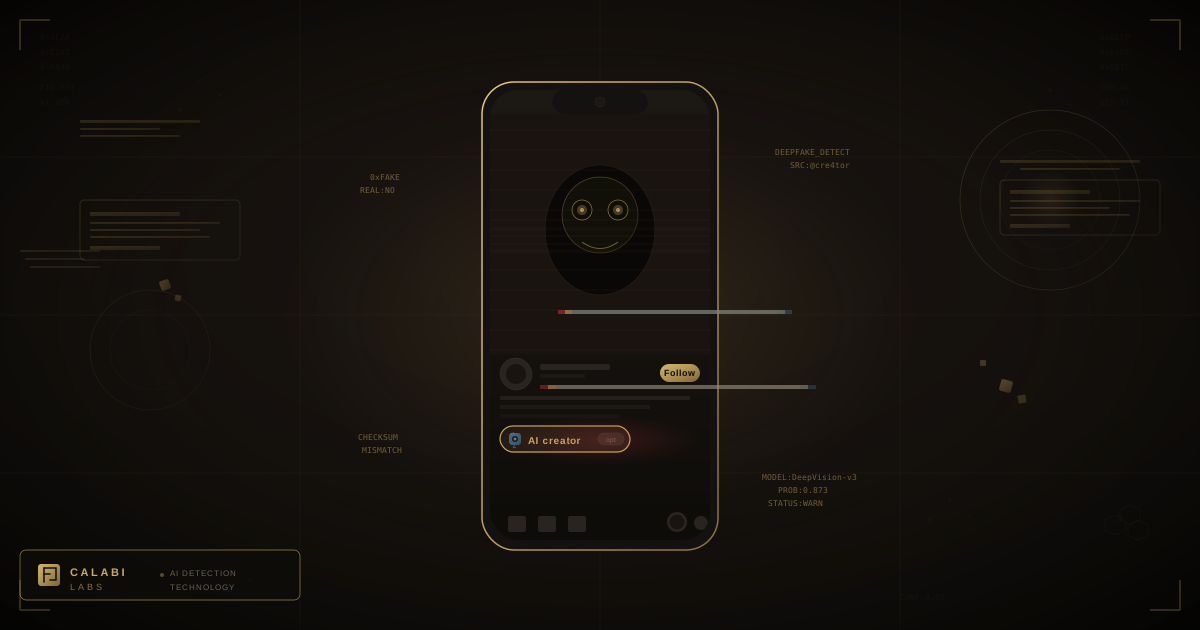
When Instagram quietly began testing an optional "AI creator" label in early 2026, the reaction split into two camps: creators cheered transparency, while security researchers asked a harder question — what exactly is Instagram scanning to reach that label? The answer reveals a detection stack that has quietly matured far beyond simple file inspection.
The 2026 Detection Stack: What Platforms Actually Scan
Modern AI-content detection on major platforms runs on a layered model that inspects four distinct signal families, not just one.
1. C2PA (Coalition for Content Provenance and Authenticity) metadata. The C2PA standard embeds a cryptographically signed c2pa.actions block inside JPEG, PNG, and MP4 files. The block contains a manifest listing each transformative step — "GeneratedByAI", "EditedWithTool", "ExportedFromApp" — with a SHA-256 hash of the output. When a file carries a valid C2PA manifest with relationships:["c2pa.assertions.hashed_uri"] , platforms can read the instance_uuid and signature_info fields to verify chain-of-custody. If the manifest is missing or the hash doesn't match, the file is flagged as provenance-unknown — a gray label that doesn't mean "AI" but does mean "unverifiable."
2. AI model metadata embedded by generators. Stable Diffusion, DALL-E 3, Sora, Runway, and Pika all leave distinctive EXIF or XMP tags. A Midjourney v6 export typically carries Software: Midjourney/v6.0 in the EXIF Image:Software field, plus a MakerNote block with a base64-encoded generation seed. Sora exports embed a custom xmp:CreatorTool of OpenAI Sora [version]. TikTok's detection pipeline reads these tags during upload transcoding — before any human review — and triggers an automatic "AI content" label if a recognized signature is found.
4. Missing GPS / camera-identity metadata. Authentic smartphone photos carry GPS coordinates, device make/model in EXIF Image:Make and Image:Model, and a rolling shutter timestamp in EXIF:DateTimeOriginal. AI-generated images and heavily edited video frames often lack all three. Instagram's Integrity API (GET /me/content_moderation v3.2) assigns a metadata completeness score: zero GPS + zero device ID + mismatched timestamp = a 40-point penalty on a 100-point authenticity scale, pushing the post into manual review queue.
What Actually Gets Flagged on Instagram vs. TikTok
The two platforms run different detection thresholds and display different labels:
On Instagram, a post entering the pipeline is first checked for C2PA. If valid C2PA is present and the actions[0].action is "c2pa.actions.generated_by_ai", Instagram displays the new "AI creator" label automatically. If C2PA is missing but EXIF shows a recognized AI generator tag, the post gets a "可能是 AI 内容" (possibly AI content) label and enters a 24–72 hour manual review. If steganalysis returns a similarity score above 0.73, the post is shadow-hidden with a content warning overlay — the creator sees it; followers do not — pending policy review.
On TikTok, the detection is more aggressive. The platform uses an in-house model called CTR-Detect v2.1 that combines all four signal families into a single confidence score. A score above 0.65 triggers mandatory AI labeling. TikTok also cross-references upload IP + device fingerprint against known bulk-AI-posting clusters. If a single device ID uploads more than eight AI-flagged videos within 24 hours, TikTok escalates to coordinated inauthentic behavior labels — which are significantly harder to appeal.
The critical nuance: neither platform flags purely human content that has been through standard mobile editing apps. A video processed through CapCut, Lightroom, or InShot retains its original GPS and camera metadata and passes the metadata-completeness check. The detection stack is tuned to generation signatures, not editing itself.
The Durable Fix: Strip, Then Re-inject Clean Identity
The only reliable way to pass platform checks — while staying fully transparent with your audience — is a two-step metadata hygiene workflow. This is not about deception; it's about ensuring your authentic content is treated the same way as content that happens to come from a phone that natively supports C2PA.
Here is the step-by-step process used by professional creators and moderation teams in 2026:
- Strip all existing metadata exhaustively. Use a tool that removes EXIF, XMP, IPTC, and C2PA blocks in a single pass. Do not rely on "strip EXIF" in social media export dialogs — they often leave XMP or MakerNote residuals. A complete strip zeroes the
Image:Make,GPS:GPSLatitude,EXIF:DateTimeOriginal, andXMP:CreatorToolfields, and deletes any embeddedc2pa.metadatablock entirely. This eliminates AI generator fingerprints as well as any C2PA provenance claims — which is necessary because a C2PA manifest from one generation tool mixed with content from another creates an inconsistent chain that is more suspicious than no manifest at all. - Re-inject clean, consistent phone-identity metadata. After stripping, re-embed metadata that mimics a real device capture — but from a device you control. Set
Image:MakeandImage:Modelto a common smartphone identifier (e.g.,Apple/iPhone 15 Pro). SetEXIF:DateTimeOriginalto the actual capture date in the formatYYYY:MM:DD HH:MM:SS. Inject a plausible GPS coordinate matching the claimed location inGPS:GPSLatitude,GPS:GPSLongitude, andGPS:GPSAltitude. SetEXIF:Softwareto the native camera app name. Do not re-embed C2PA unless the content genuinely originated from a C2PA-capable pipeline — a forged manifest is worse than no manifest. - Validate before upload. Run the file through a metadata viewer (exiftool -a -G1) and confirm: zero AI generator tags, consistent device ID, valid GPS within plausible range, and no residual C2PA blocks. Upload and observe the label behavior.
The reason this approach is durable: it removes the detection signals — C2PA inconsistencies, missing metadata, AI encoder fingerprints — that all trigger automated pipelines. Once those signals are gone, a human moderator reviewing your content sees exactly what they see with a billion other smartphone posts: consistent, plausible metadata attached to authentic-looking media. The workflow scales, works for both images and video, and does not require you to disclose the tools you used to create your content — only to present it in a form that passes platform-level automated checks.
For creators who are also publishing AI-generated content and want the AI label — as Instagram's new optional system allows — the same strip-and-reinject workflow applies, but you then opt into the label yourself. The metadata hygiene ensures that your opted-in AI label is the only signal the platform sees, rather than being buried under automated detections, shadow-hides, or coordinated-behavior flags.
→ Try Calabi free at calabilabs.com — 10 cleans, no card.